


Clear, 73°
Wind: mph,
Marches, lectures, hunger strikes and civil disobedience all became tools in the women’s suffrage movement from the late 1800s to early 1900s. While the 19th Amendment was ratified in 1920, granting women the right to vote, it would take another 43 years before Congress passed the Equal Pay Act.
While they did not use the same tactics, some Severna Park trailblazers created more opportunities for other women. Here are just a few of their stories.
Marjorie Holt
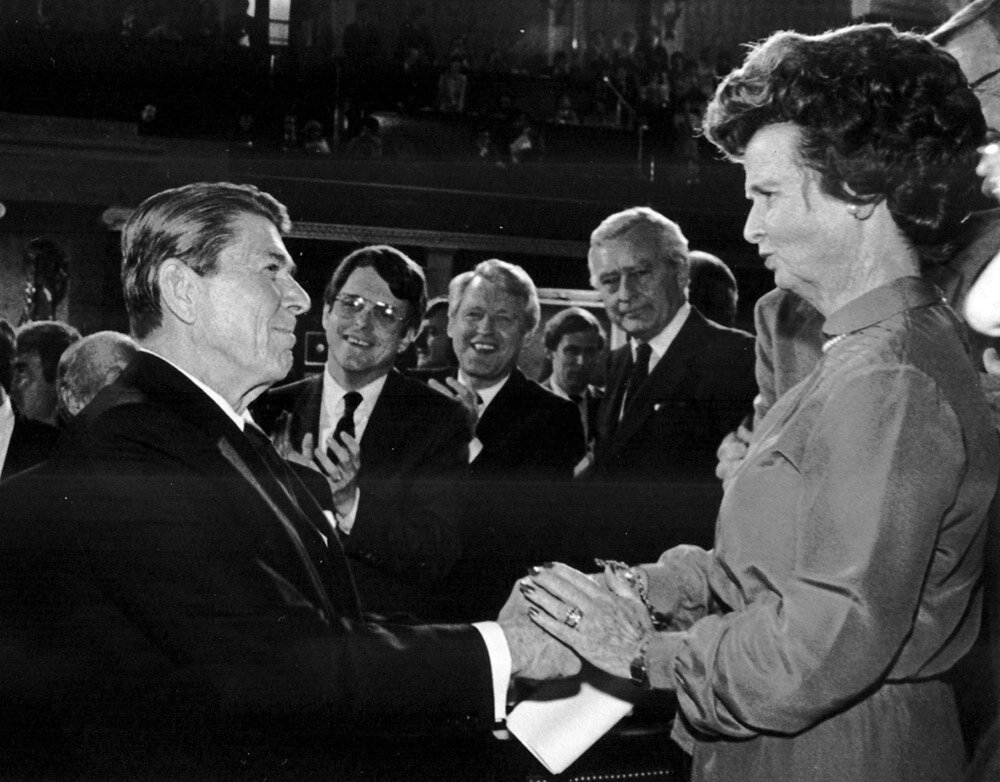
Before she became Maryland’s first female member of Congress, Marjorie Holt embarked on a journey of breaking boundaries. While pursuing her Juris Doctor, she was one of only five women accepted into her class. Though she faced discrimination and outright harassment from her professors, she graduated in the top 2% of her class in 1949.
Her husband’s job brought the couple from Florida to Pennsylvania and eventually to Maryland, and the couple had a home built in Severna Park.
Holt surprised everyone in 1966 when she defeated longtime political stalwart Louis Phipps Jr. in a race for the clerk of the Anne Arundel County Circuit Court, where she served until 1972. As a circuit court clerk, she married couples and helped businesspeople and contractors obtain licenses.
With that base of followers, she campaigned for the newly formed Congressional District 4 following a 1970s Census. This new district had more than twice as many Democrats as Republicans, but Holt’s followers were loyal, and she won with 59% of the vote. For the Severna Park representative, it was the first of seven successive terms, each of which earned bipartisan support.
After 14 years in Congress, in 1986, Holt retired from politics to spend more time with family, though she continued to be a community leader in other ways. She volunteered through Woods Church – where she had worshiped since moving to Severna Park and had been the first woman elected as an elder – as well as through Meals on Wheels and Light Street Soup Kitchen. She also remained active with the Severna Park Republican Women’s Club, of which she had been a founding member.
Following her death in 2018, leaders around Maryland paid their respects and spoke about the woman who taught them so much.
“She decided she wasn’t subject to a label, and it didn’t matter who was telling her no,” Judge Cathy Vitale previously told the Voice. A Severna Park native, Vitale credits Holt’s mentorship in helping her through her political career on the Anne Arundel County Council and in the House of Delegates. “She didn’t want to be a ‘lady lawyer’ or a ‘lady politician,’” Vitale continued. “She wanted to be a good lawyer and a good politician. … She showed the men that the back room – where they sat with their cigars and their conversations – is open to anyone who wants to push the door open, but you have to push it open. She said, ‘Open this door, or I’m gonna bust it down.’ … She was so confident in herself that labels and barriers meant nothing to her. When people told her no, she fought harder.”
Lillian “Lil” Shelton
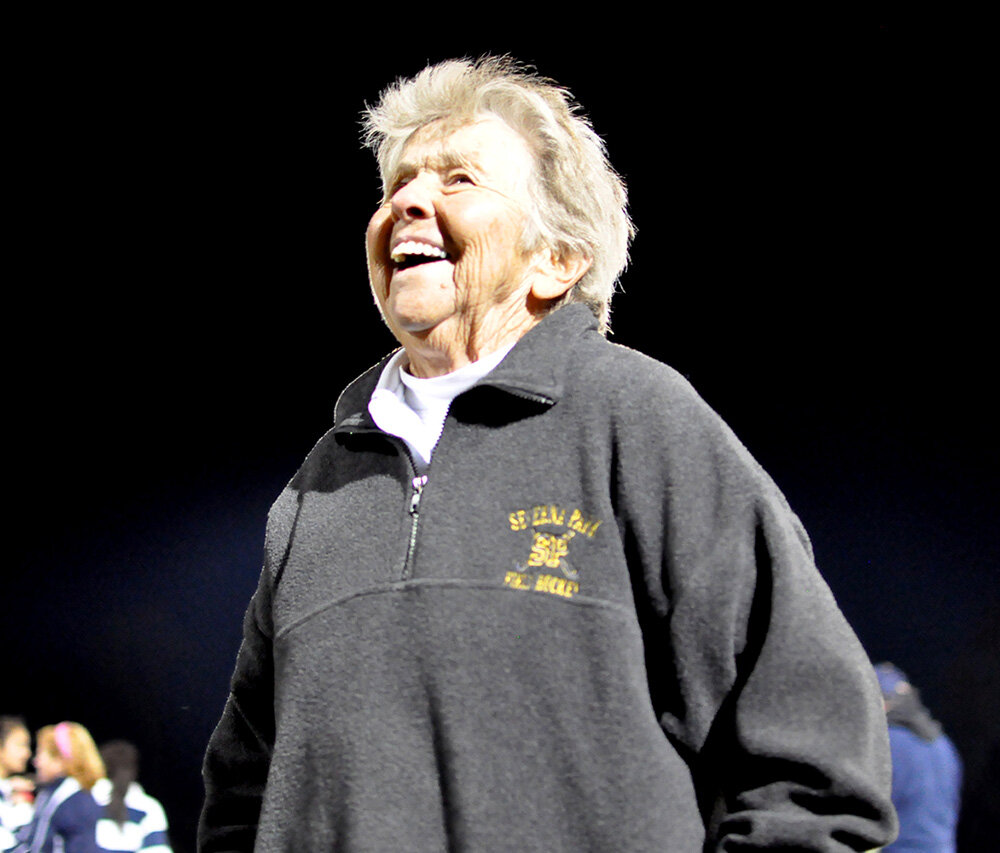
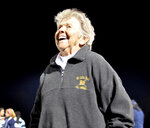
Georgia native Lillian “Lil” Shelton fought for women’s equality in a different way: through athletics. She moved to Alabama and then Virginia before moving to Severna Park in 1971. In 1973, Lillian “Lil” Shelton began her coaching career as the first softball coach for Severna Park High School, and two years later, she started the field hockey program.
“There was no sports for girls in Anne Arundel County when I moved here and I couldn’t stand that,” Shelton explained in a 2011 interview with The Washington Post. “I felt that the girls were being denied some things that they should have.”
Shelton became Severna Park High School’s first field hockey coach in 1975. From there, she carved out a spot in the state athletic record books, winning 20 state championships along with 31 county finals victories and 29 regional titles.
But for the girls who Shelton coached, the impact went far beyond wins and titles, as Kiersten Kozireski told the Severna Park Voice in 2021.
“She created a mutual connection of love and respect between each and every player,” said Kozireski, who played under Shelton from 2007 to 2010. “She paid attention to her sideline athletes the same way she did her top scorers.”
A wife and mother, Shelton wanted to give all girls the opportunity to discover a love for sports. She co-founded the SPark indoor field hockey program, the Field Hockey Coaches Association of Maryland and the Maryland State Games.
Sure, her resume was impressive. She was inducted into the Severna Park High School Hall of Fame, the Anne Arundel County Hall of Fame, and the National Field Hockey Association Hall of Fame. She was U.S. Coach of the Year, and Coach of the Year for The Washington Post, the Baltimore Sun, and The Capital numerous times. Severna Park High School honored her by naming a field after her. But some of her favorite achievements were helping young athletes, an impact that has continued to last after she died in 2021.
“She brought out the best in every player,” said Shelton’s daughter Lorie Hankins. “She made them work hard but they had fun. She had a great record, yes, but her legacy is the values she taught … (the girls) knew she cared about them as people, not as players.”
Margaret Moss started teaching at Severna Park Elementary School in 1914 and never looked back, spending over 50 years as a teacher and principal. Meanwhile, she continued her own education with credits and certifications from Towson’s Teacher’s College (now Towson University), the University of Virginia, St. John’s College, Johns Hopkins University and the University of Maryland. She retired in 1967 at age 76.
Catherine Wilson took matters into her own hands as a member of the Earleigh Heights VFC Ladies Auxiliary. Organized in May 1939, the auxiliary became especially active during World War II when the men overseas and the fire departments were suffering. The women had to step up and fight fires, as they were the only able-bodied people around. Wilson is one person named throughout the Earleigh Heights records. Her husband had a farm, and she knew how to drive the farm truck, which meant that she was able to drive the fire trucks.
Margueritte Mills and Pat Troy partnered to publish hyperlocal news and improve their community. Troy chaired the Severna Park Small Area Plan Committee to maintain the wishes of residents regarding development, and she helped organize the Severna Park Independence Day parade, which was founded by Peg Nelson, Sue and John Norris, and Mills, who also created the Severna Park Voice. “She was a visionary woman and very tenacious,” Troy said of Mills.
Troy was also a former president of the Greater Severna Park Council for three years and was co-chair of the town’s centennial celebration in 2006. As owner of Bay Media Inc., she published several books by authors who featured local landmarks. Those works included “Severna Park Reflections: An Album of Memories,” “Linstead on the Severn” and “Arnold, Maryland and Neighbors on the Broadneck.”
Janet Owens became the first female Anne Arundel County executive after promising to slow development and increase school funding. The Millersville resident served two terms from 1998 to 2006.
Cathy Vitale served on the Anne Arundel County Council from 2000-2010, and it would take another eight years before another woman was elected to the same position (voters picked Amanda Fielder and four other women as councilmembers during the 2018 election). Vitale also served in the House of Delegates from 2011-2015 before becoming a circuit court judge in 2015.


Comments
No comments on this item Please log in to comment by clicking here