


Light Rain, 61°
Wind: mph,
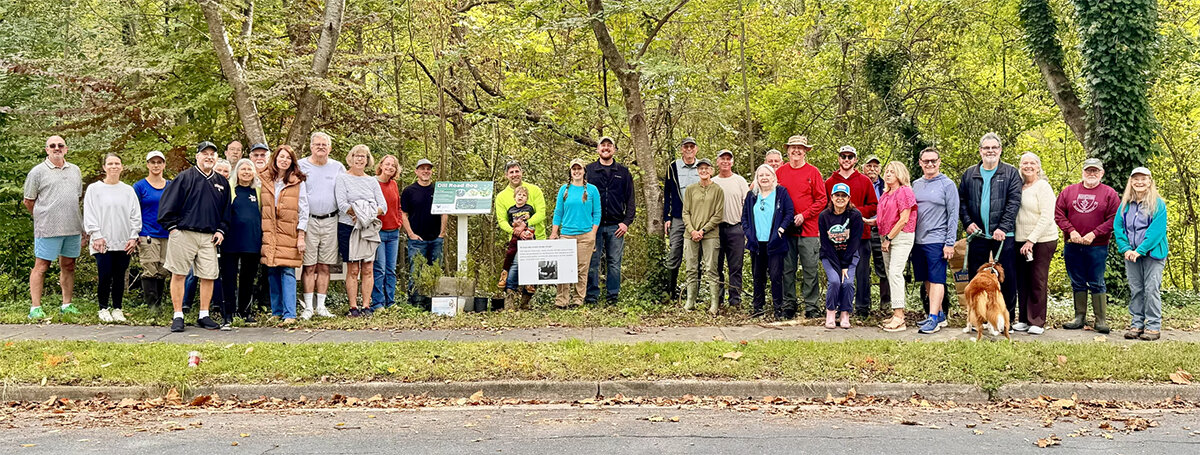
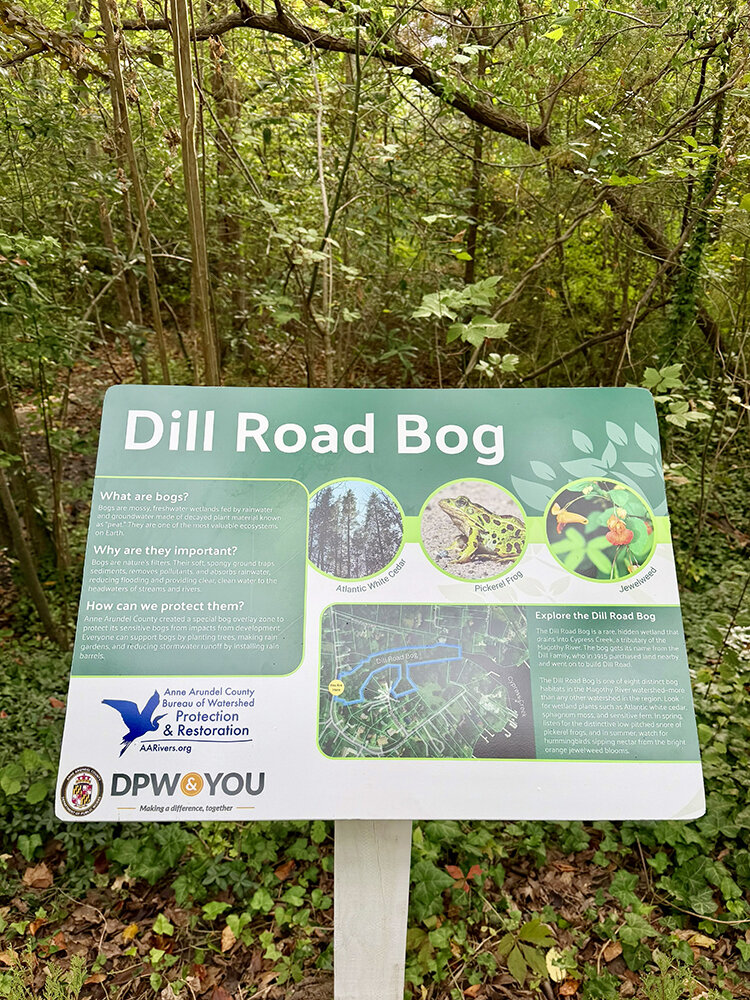

Cypress Creek community members gathered at the Dill Road Bog on October 10 to celebrate the ecological importance of the neighborhood’s most environmentally sensitive area. Organized by community member Amanda Schuler Zepp, the event focused on educating residents about the importance of preserving and protecting the bog, removing invasive English ivy from trees and planting five Atlantic white cedar saplings donated by Underwood & Associates.
Dennis Whigham, scientist emeritus at the Smithsonian Environmental Research Center and a board member of the Center for Ecosystem Recovery, spoke to the group about the unique characteristics of the Dill Road Bog and the negative impacts that development and rising sea levels have had on the area.
Whigham discussed a wetland study he conducted in the 1970s that examined six bog-like areas in Anne Arundel County. According to Whigham, the Dill Road Bog is the most distinctive because, unlike the others, which were created through human activity, it is the only one that formed naturally.
Whigham emphasized the environmental diversity that Anne Arundel County residents enjoy, noting, “There’s no other place … in the coastal plain of Maryland or in the Piedmont of Maryland where you have as many of those kinds of environments as you have just in your backyard.”
Whigham added that Anne Arundel County’s bogs are struggling to survive amid development and rising sea levels. Their preservation is particularly important because these wetlands play a significant role in filtering water before it enters surrounding estuaries.
“These are special places, and I assume most of you live in this community and cherish it. Do whatever you can to keep places like this and support the county’s efforts to secure them, to make sure that they’re in your children’s future and your grandchildren’s future,” Whigham said.
Sally Hornor with the Magothy River Land Trust also spoke with the group about the importance of conserving wetlands and forests within the Magothy Watershed and how the organization works with property owners to create conservation easements that protect land from development.
“It’s in perpetuity, so when you preserve that land, you can sell the land or do whatever you want in terms of transferring it. But it stays protected forever, so that’s a really wonderful thing,” Hornor said.
Led by Brian Gugerty with the Anne Arundel County Watershed Steward Academy’s Save Our Trees program, neighbors freed numerous trees that were compromised by English ivy, which competes with the trees for water, nutrients and sunlight. The invasive vine also can rot tree bark and eventually cause trees to topple.
More than 30 community members attended the event, which included the unveiling of a new educational sign for the bog provided by the Anne Arundel County Bureau of Watershed Protection and Restoration.
“I’ve been absolutely blown away by the support I’ve received from the county. This began as a 311 report asking for help removing English ivy,” Schuler Zepp said. “Before I knew it, I was being connected with county and nonprofit resources and encouraged to organize an event to not only begin restoring the health of the Dill Road Bog, but also to encourage neighbors to continue protecting this vital environmental area. It’s been so refreshing to connect with conservation-minded individuals in our community and county.”


Comments
No comments on this item Please log in to comment by clicking here