



Clear, 73°
Wind: mph,
Not every bike or scooter is created equal.
Electric bikes (e-bikes) and e-scooters are allowing riders to travel at faster speeds than traditional bicycles, but with that convenience comes great responsibility.
Health and data firm Truveta analyzed over 12,000 emergency room visits in the U.S. and found a 671% increase in cases related to e-bikes and e-scooters from January 2023 to May 2026.
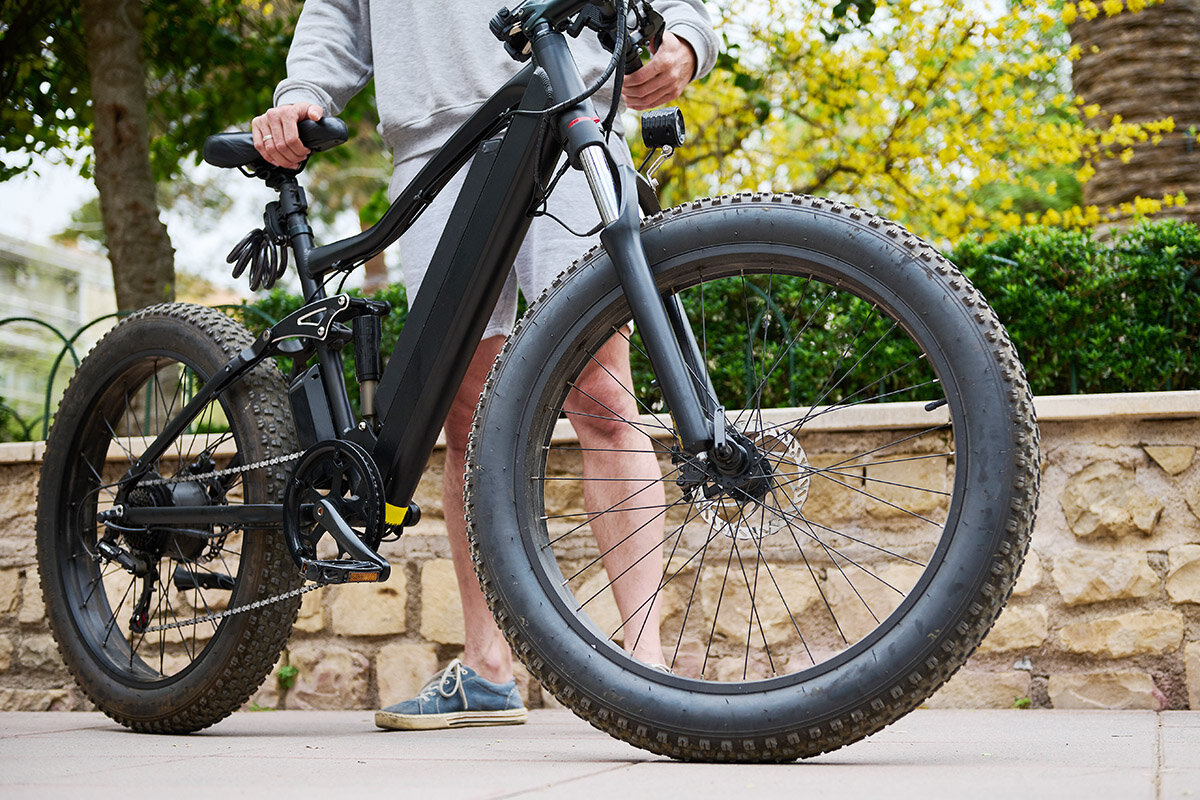
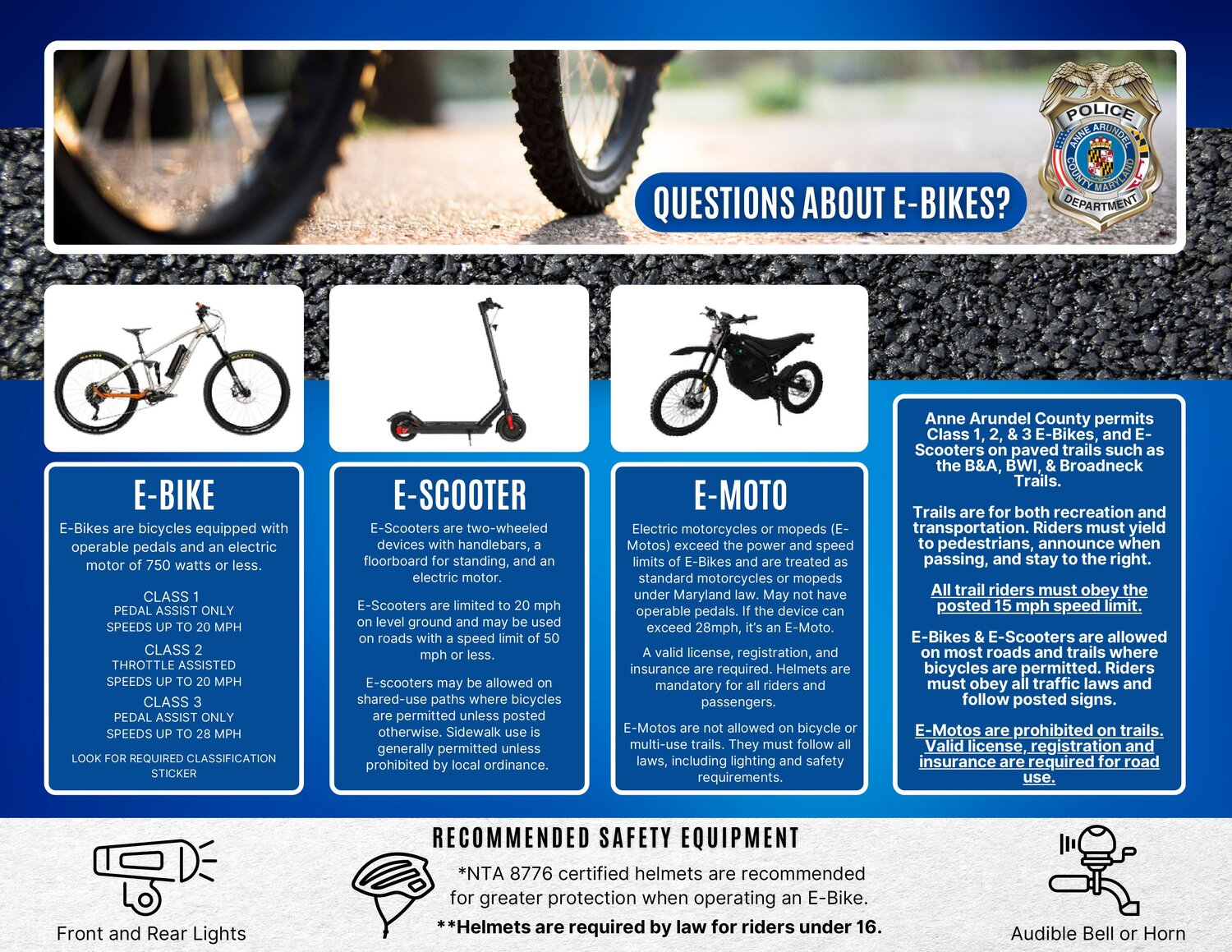
E-bikes are bicycles equipped with operable pedals and an electric motor of 750 watts or less. They are separated into three classes with some being pedal assisted and some being throttled assisted, and they range in top speed from 20 to 28 miles per hour. E-scooters are two-wheeled devices with an electric motor and handlebars that help operators stand. These are limited to 20 miles per hour on level ground.
Then there are electric motorcycles and mopeds, or e-motos for short, which are treated as standard motorcycles under Maryland law. These generally exceed 28 miles per hour.
Both e-bikes and e-scooters are allowed on the B&A Trail and other paved areas as long as riders obey the 15 mile-per-hour speed limit and traffic laws.
Bicycle Advocates for Annapolis and Anne Arundel County (Bike AAA) President Jon Korin has heard the community outcry for more e-bike and e-scooter regulations.
“There are already regulations for e-motos, which require a license, registration and insurance,” Korin said. “We see kids going 25, 30 or even 40 miles. Those are not e-bikes in statute. Those are e-motos in statute and they have prohibited use on the trail.”
Accidents can be caused by the operator of the electric vehicle or another vehicle, which is why education is paramount, according to Dr. Omoyemi Adebayo, an emergency medicine physician at the University of Maryland Baltimore Washington Medical Center.
“I think the part that people really underestimate about these types of bikes and scooters is that they really can travel fast and a simple loss of control can make them behave more like a small vehicle in a crash and cause injuries that are similar to those that you would see in a motorcycle accident or a collision in an actual car itself,” Adebayo said. “The key issues boil down to a few things: speed, visibility, distractions and really if people are using the equipment or other equipment that is appropriate for the type and classification of device that they are using.”
Stories nationwide have painted the issue with urgency. A 17-year-old died after his e-bike collided with an SUV in Manhattan, New York on July 29. In Florida, a 13-year-old boy had plans to buy flowers for his mom before a pickup truck struck him and caused fatal injuries in May.
“It takes a simple open car door, a patch of gravel, a slick spot on the road, a car making a turn unexpectedly to really change what was great preparation before your ride and lead to a serious and traumatic event for hours, days or even weeks to come,” Adebayo said, emphasizing the need to limit distractions like cellphones and headphones. “It’s important for people to understand that preparation for being safe starts well before the crash itself.”
Advocates don’t want the risks to prevent responsible riders from having transportation options.
Sandy Bishop runs a Cycling Without Age program that uses electric-assist trishaws, similar to pedicabs, to take seniors from assisted living and memory care for rides on the B&A Trail. She is also a BikeAAA board member and has two daughters, Lucy and Alice, who use electric transportation.
“Lucy rides the bike trail and Benfield from the high school to Safeway five to six days a week for her 6:00am-2:00pm shift,” Bishop said. “She rides an upright three-trike. There are no public transportation options for her. Micro-mobility in the form of an e-trike gives her freedom and independence of movement she can't get with anything else. She travels on her own schedule.”
Her parents drive her to work when the roads aren’t safe for riding. Lucy cannot ride on sidewalks due to the width of her trike and because uneven terrain makes it difficult for the trike to balance.
Alice just moved to Odenton to be near the MARC passenger rail station.
“She can catch the commuter shuttle that runs between the train station and her work, but for everything else, she uses a power chair for close errands if the sidewalks are wide enough and clean enough — questionable along MD-175, even right around the county library — or her recumbent e-trike for longer runs, but again, very limited places to ride a long low e-trike.”
Enforcement is usually the answer for people who break traffic laws, but the Anne Arundel County Police Department has a policy not to pursue riders because a chase could cause a greater public risk.
A spokesman for the Anne Arundel County Police Department said officers are focused on community engagement and education to ensure everyone understands the rules of the road. They encourage parents and riders to familiarize themselves with local regulations to ensure these devices are operated responsibly.
With the absence of enforcement, some people are turning their attention to legislation. New Jersey’s new laws went into effect in July, with riders over 17 needing a driver's license and riders 15-16 needing a special e-bike or moped license. All e-bikes must also be registered with the New Jersey Motor Vehicle Commission.
Korin thinks those requirements would be a step too far in Maryland.
“We want to make sure we don’t over-legislate,” Korin said. “We want people to be able to use these devices as long as there are safe routes for them and they are using it safely.”
He sees legislation as a tool for education instead of banning the devices.
“We’re working on trying to get a requirement for sellers, online and retail, to make sure (electric devices) are labeled properly and there is disclosure about what they can do,” he said.


Comments
No comments on this item Please log in to comment by clicking here