



Clear, 73°
Wind: mph,
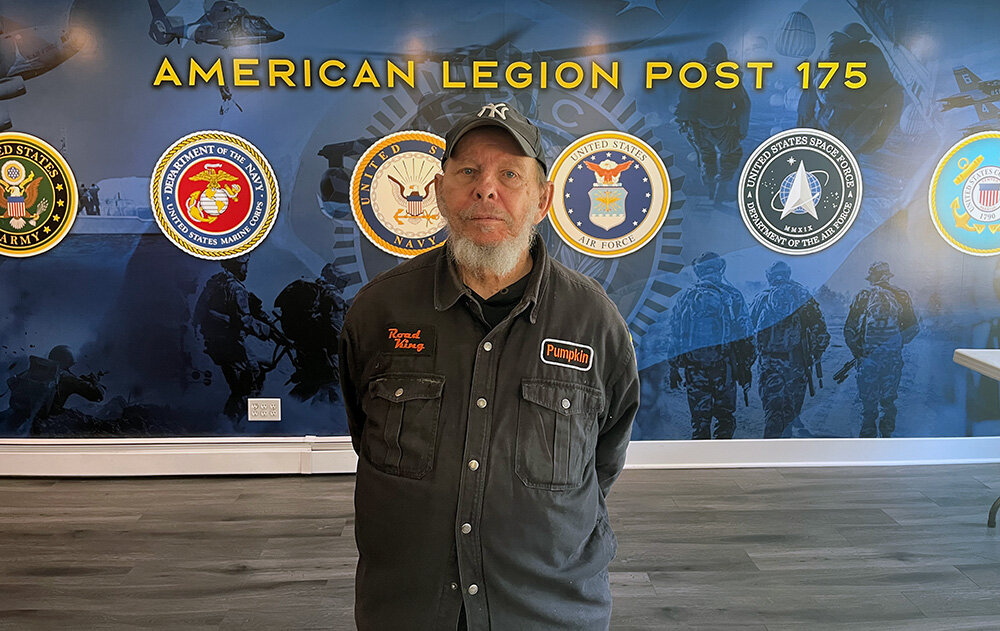
Trudging through the central highlands of Vietnam was no picnic during the 1960s. Triple canopy jungles, sweltering heat and rain monsoons frequently greeted U.S. troops. Though that’s not the full picture that Bob Quigel got from seeing the war effort depicted on television.
“It looked like a good adventure,” the Severna Park resident recalled roughly six decades later when asked why he decided to enlist in the Army.
American Legion Post 175 officers believe Quigel is their most decorated veteran. He has a Purple Heart, Bronze Star and Combat Infantry Badge from his time in the Army, from 1968-1971. He started as a private first class and ended as an E-5 sergeant.
After a stint with the 82nd Airborne Division, he became a member of the 4th Infantry Division. These soldiers — affectionately called “grunts” — were also known as the “Ivymen” for the Roman numeral IV.
“It was our job to find and kill the Viet Cong,” Quigel said. “That’s what we were supposed to do: find the enemy and shoot them. It all happened so fast.”
His time in Vietnam was filled with adventures but also the horrors of war. An encounter in November 1969 gave him permanent injuries: a busted knuckle, a twisted finger and a head wound.
“I was holding an M16 machine gun when I got hit,” Quigel said. “It went through my helmet. My helmet didn’t do much.
“My platoon’s machine gunner in front got shot through the liver,” he continued. “He got hit, so I picked up his M60 and then I felt a big blast on the hill.”
The Ivymen did not see the attack coming.
“They were waiting for us with an ambush,” Quigel said. “A helicopter came in with a red cross and (the soldiers) were shooting at us.”
He spent a few months in a hospital, grateful that he survived, as did the machine gunner. More than 58,000 U.S. troops died during the war or from their injuries suffered during the conflict.
Some of those fatalities he witnessed firsthand. One time, his infantry could not communicate with a helicopter pilot, and the soldiers aboard killed two people in a friendly fire incident.
They also had to contend with the Viet Cong, who were skilled in guerilla warfare.
“They were good at hiding,” Quigel said. “We even found a hospital underground.”
As was the case for many Vietnam veterans, his homecoming was not all pleasant.
“They called us baby killers. We didn’t kill babies,” he said. “I hate that all those people died. That’s war.”
In 1971, Quigel took a position at Fort Meade. Even there, he did not feel comfortable.
“I was a decorated combat veteran. They had never been to Vietnam,” he said, contemplating the differing views. “Now, I wear my Vietnam hat and people thank me for my service. So, it doesn’t bother me.”
He has found solace in the support of his family: his wife of 55 years and two daughters.
Also comforting, oddly enough, is watching war films. His favorite is Stanley Kubrick’s “Full Metal Jacket.” But he still grimaces when he sees factual inaccuracies depicting war, like when blood packets squirt out of a character due to an injury.
Vietnam was full of uncomfortable moments and devastating losses. But if he closes his eyes, Quigel can picture exhilarating moments too. An estimated 50 times, he put aside his fear of heights as he rode in a helicopter, often with his legs hanging out the door and a machine gunner to his side.
“It was an adventure,” he said.



Comments
No comments on this item Please log in to comment by clicking here