


Cloudy, 60°
Wind: mph,
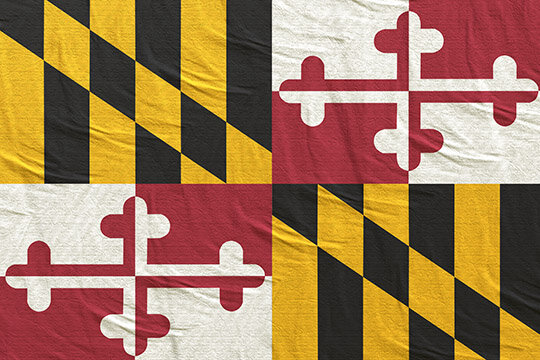
As the United States celebrates its 250th anniversary, it provides an opportunity to reflect on historic milestones that have occurred in the state of Maryland over the last two and a half centuries. Though Maryland was established as a British colony in 1634, it did not become a state until 1788, and much has happened in the Old Line State since the founding of America in 1776.
1776: Four Marylanders were among the 56 signers of the Declaration of Independence: Charles Carroll of Carrollton, Samuel Chase, William Paca and Thomas Stone. Notably, Charles Carroll was born in Annapolis, was the only Catholic signer, and outlived four of the first five U.S. presidents, dying at the age of 95.
1781: Maryland was the 13th and last state to ratify the Articles of Confederation, which served as the United States’ first constitution.
1788: A bit earlier in line this time, Maryland was the seventh state to ratify the U.S. Constitution. Of the 39 delegates at the 1787 Constitutional Convention who were signers, three represented Maryland: Daniel Carroll, Daniel of St. Thomas Jenifer, and James McHenry – for whom the fort in Baltimore is named.
1814: Marylander Francis Scott Key witnessed the British bombardment of Fort McHenry in September of 1814, during the War of 1812. Inspired by a flag still flying over the fort at daybreak, he penned a poem titled “The Defense of Fort M’Henry.” The poem was later set to music and in 1931 became the national anthem, “The Star-Spangled Banner.”
1844: Samuel Morse, who developed Morse code, sent the first official telegraph in the United States. The first telegraph line ran from Washington, D.C., to Baltimore, and the first message transmitted was “What hath God wrought!”
1845: Initially called the Naval School, the United States Naval Academy was established through the efforts of Secretary of the Navy George Bancroft. It consisted of 50 midshipmen and seven professors, and it was located at a 10-acre Army post called Fort Severn in Annapolis. It was renamed five years later.
1849: Harriet Tubman escaped slavery in Dorchester County and became a “conductor” of the Underground Railroad soon after. She returned to Maryland at least 13 times over the next decade to rescue 70 enslaved people.
1862: The Battle of Antietam took place in Sharpsburg in Western Maryland. It is remembered as the “single bloodiest day of the Civil War,” with nearly 23,000 casualties. Though a tactical draw, the outcome emboldened President Abraham Lincoln to issue the preliminary Emancipation Proclamation five days later, recasting the war as a fight against slavery.
1952: The original span (eastbound) of the Chesapeake Bay Bridge opened, connecting Maryland’s western and eastern shores. The bridge revolutionized transportation for the Mid-Atlantic region. At the time, it was the third-longest bridge in the world. The second span (westbound) opened in 1973.
1995: Annapolis marked its 300-year anniversary as the capital of Maryland. St. Mary’s City was the capital of the colony of Maryland for 60 years prior. Annapolis served as the temporary capital of the United States from November 1783 through August 1784.


Comments
No comments on this item Please log in to comment by clicking here